The Erosion of Internet Privacy: USA, China & Russia (2026)
A 15th Consecutive Year of Declining Internet Freedom
The digital landscape in early 2026 continues to reflect a persistent global decline in internet freedom, as documented in Freedom House's Freedom on the Net 2025 report, covering conditions through mid-2025. Of the 72 countries evaluated, 28 experienced deteriorations, with authoritarian governments leveraging AI-driven censorship and tracking, while even "free" nations like Germany, Georgia, and the United States saw setbacks.
This trend is exacerbated by rising surveillance, internet disruptions, and arrests for online expression, often justified by national security or public safety. Recent leaks — such as the November 2025 KnownSec data breach revealing China's cyber-espionage ecosystem and exports of "Great Firewall" technology — highlight the transnational spread of these tools.
Western Countries: Regulatory Creep and Encryption Threats
In Western democracies, internet privacy is increasingly compromised by expanding surveillance laws and regulatory enforcement, despite protections like the EU's General Data Protection Regulation (GDPR). The United States lacks a comprehensive federal privacy law, relying on sector-specific rules and mechanisms like the Foreign Intelligence Surveillance Act (FISA) for secret data access, with data breaches surging in 2025 exposing millions to unregulated third-party surveillance.
In the EU, enforcement under the Digital Services Act has intensified, but the "Chat Control" proposal for combating child sexual abuse material raised privacy alarms. By late 2025, mandatory scanning of encrypted messages was abandoned due to opposition, shifting to voluntary measures under a framework expiring in April 2026, though age verification debates continue. Proposals for wider data retention, targeting VPN providers, further threaten anonymity.
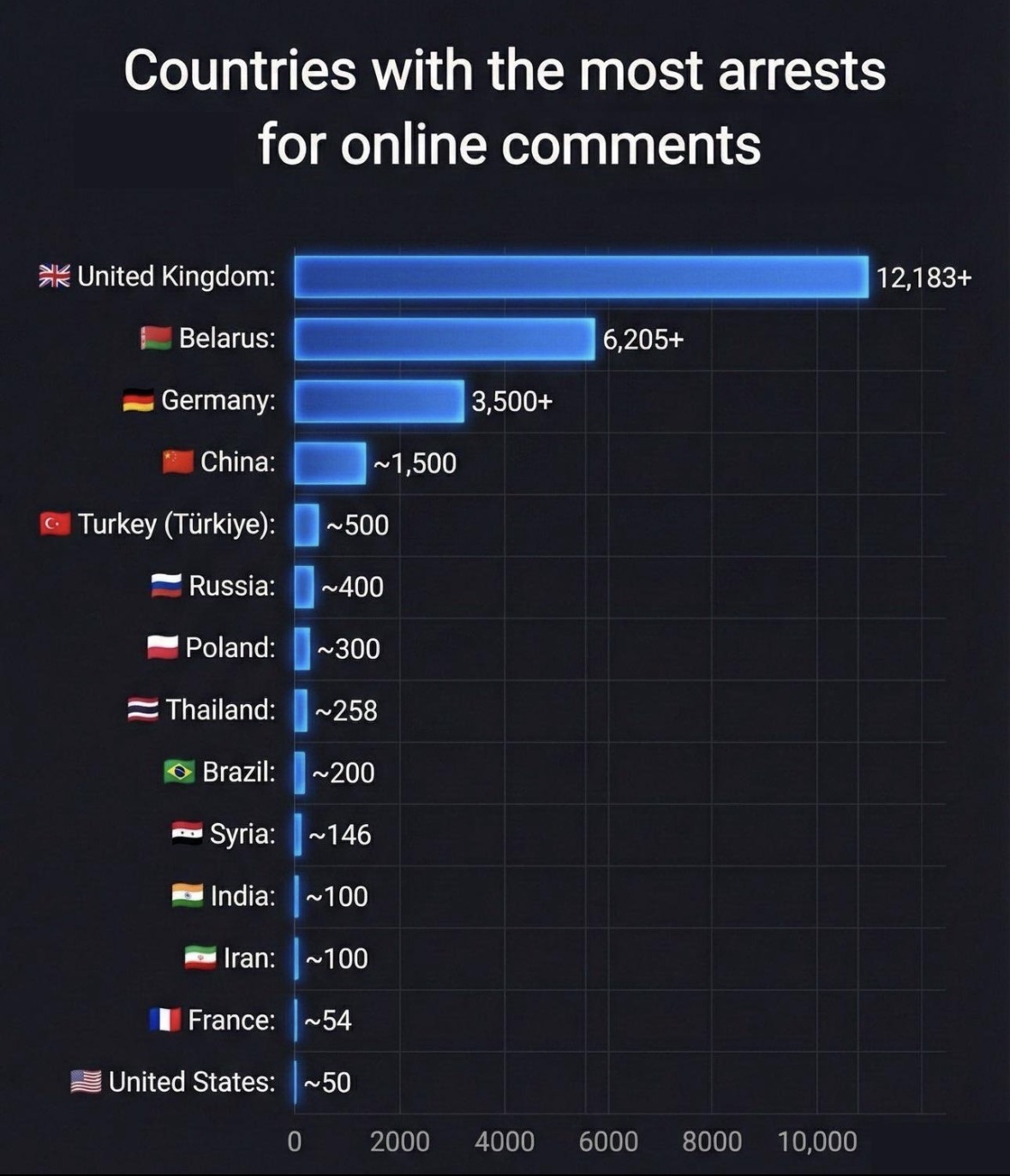
The United Kingdom: 12,000 Arrests Per Year for Online Posts
The United Kingdom exemplifies the West's trajectory toward heightened censorship via the Online Safety Act (OSA), implemented in phases since 2023, enforcing platform duties to remove illegal content and introducing offenses like cyberflashing. Privacy advocates warn of an "unprecedented attack" on encryption, with scanning provisions stalled until technically feasible. Leaks exposing UK government orders threatening global privacy underscore the reach of surveillance partnerships.
China: The World's Most Restrictive Internet Environment
China upholds the world's most restrictive internet environment, consistently ranked lowest in Freedom on the Net 2025. The Great Firewall employs AI for real-time censorship, blocking foreign sites and intensifying monitoring of ethnic minorities, with "alarming" regional escalations in 2025. Henan users were denied access to five times more websites than the national average.
Leaks in 2025, including KnownSec's exposure of contractor-driven espionage and exports of censorship technology, reveal how surveillance tools have enabled mass detention in Xinjiang. The transnational spread of Great Firewall technology to other authoritarian states represents an escalating global threat.
Russia: Record Shutdowns and Sovereign Internet Isolation
Russia's "sovereign internet" initiative has accelerated digital isolation, with intensified blocking, disruptions, and surveillance since the 2022 Ukraine invasion. New laws criminalize "searching for extremist content," with fines and VPN bans expanding state control. Arrests for online speech are rampant, with users facing imprisonment for dissent. Leaks expose Russia's procurement of Western technology for surveillance, including the Harmony program.
Iran, Turkey, and Saudi Arabia: Regional Patterns
Similar patterns emerge across Iran, Saudi Arabia, and Turkey. Iran imposed severe internet blackouts amid 2026 protests, with a 97% usage drop and over 2,200 arrests for online dissent, disrupting global connectivity. Turkey blocked 3,300 URLs in the first seven months of 2025, detaining 24 journalists for online content, with "national security" as the top rationale. Saudi Arabia maintains strict controls, with arrests for critical posts common under cybercrime laws. Arrests for online expression have now been recorded in at least 57 countries globally.
Comparative Analysis: West and East Are Converging
While differences persist — Western countries employ legal frameworks and public-private partnerships with safeguards like GDPR, versus direct state dominance in China and Russia — the similarities are escalating at an alarming rate. All regimes justify controls through similar pretexts: child safety in the West (UK OSA, EU Chat Control) and national security in the East (China's Cybersecurity Law, Russia's sovereign internet).
Anti-encryption pushes in the UK and EU mirror China's bans and Russia's VPN restrictions. AI's role converges — predictive censorship in China, regulatory debates in the West. The UK's 12,000+ annual detentions for online posts now sit alongside China's extralegal punishments and Russia's fines for "extremist" searches. China's regime is more advanced than Russia's emerging system, but both export their models — blurring lines with Western trends.
A Tipping Point Toward Universal Digital Oversight
The blurring distinctions between Western privacy erosions and authoritarian controls signal a tipping point toward universal digital oversight, driven by AI and regulatory convergence. Without robust interventions, escalating arrests and surveillance — evident in the UK's daily detentions, China's AI dominance, Russia's shutdowns, and Iran's blackouts — will further diminish global online freedoms. Policymakers must prioritize encryption and transparency to counter this trajectory.
The Societal News Team 10 JAN 2026
Follow Us!
It helps decentralize our presence across the web and it's completely free!
Instagram ➤
Youtube ➤
Substack ➤
X.com ➤
Telegram ➤
TikTok ➤