The Divine Liturgy: Heaven on Earth
The Center of Everything
In the year 987 AD, Prince Vladimir of Kiev sent envoys across the known world to investigate the great religions and determine which faith his people should adopt. They visited the Muslims of the Volga Bulgars, the Jewish Khazars, the Latin Christians of the West, and finally the Orthodox Christians of Constantinople. When the envoys attended the Divine Liturgy at the great Church of Hagia Sophia, they were overwhelmed. Their report to Vladimir has become one of the most famous sentences in Russian history: "We knew not whether we were in heaven or on earth, for surely there is no such splendor or beauty anywhere upon earth. We cannot describe it to you; only this we know, that God dwells there among men, and their service surpasses the worship of all other places."
Vladimir chose Orthodoxy, and the Rus were baptized. Whether or not the story is precisely historical, it captures something that every Orthodox Christian recognizes as true about the Divine Liturgy: it is not a religious meeting, not a moral lecture, not a program of spiritual edification. It is an encounter with the living God. It is, in the understanding of the Orthodox Church, a genuine participation in the worship of heaven itself, made present on earth in the gathered community of the faithful around the altar.
The Divine Liturgy is the central and supreme act of Orthodox Christian life. Everything else in the life of the Church, from the calendar of fasts and feasts to the practice of private prayer to the whole edifice of Orthodox theology, exists in relation to the Liturgy and finds its meaning in connection to it. To understand Orthodoxy without understanding the Liturgy is like trying to understand a river by studying everything except the water. The Liturgy is where the Church most fully is what it is, where the Gospel is most completely enacted, and where the human person most directly encounters the God who became flesh, died, rose from the dead, and continues to give Himself to His people in the bread and the cup.
What Is the Divine Liturgy? Naming and Definition
The word liturgy comes from the Greek leitourgia, which in classical usage referred to a public work or service performed for the benefit of the community. When the early Christians adopted the term for their central act of worship, they were making a statement: this is the public work of the people of God, performed for the life of the world.
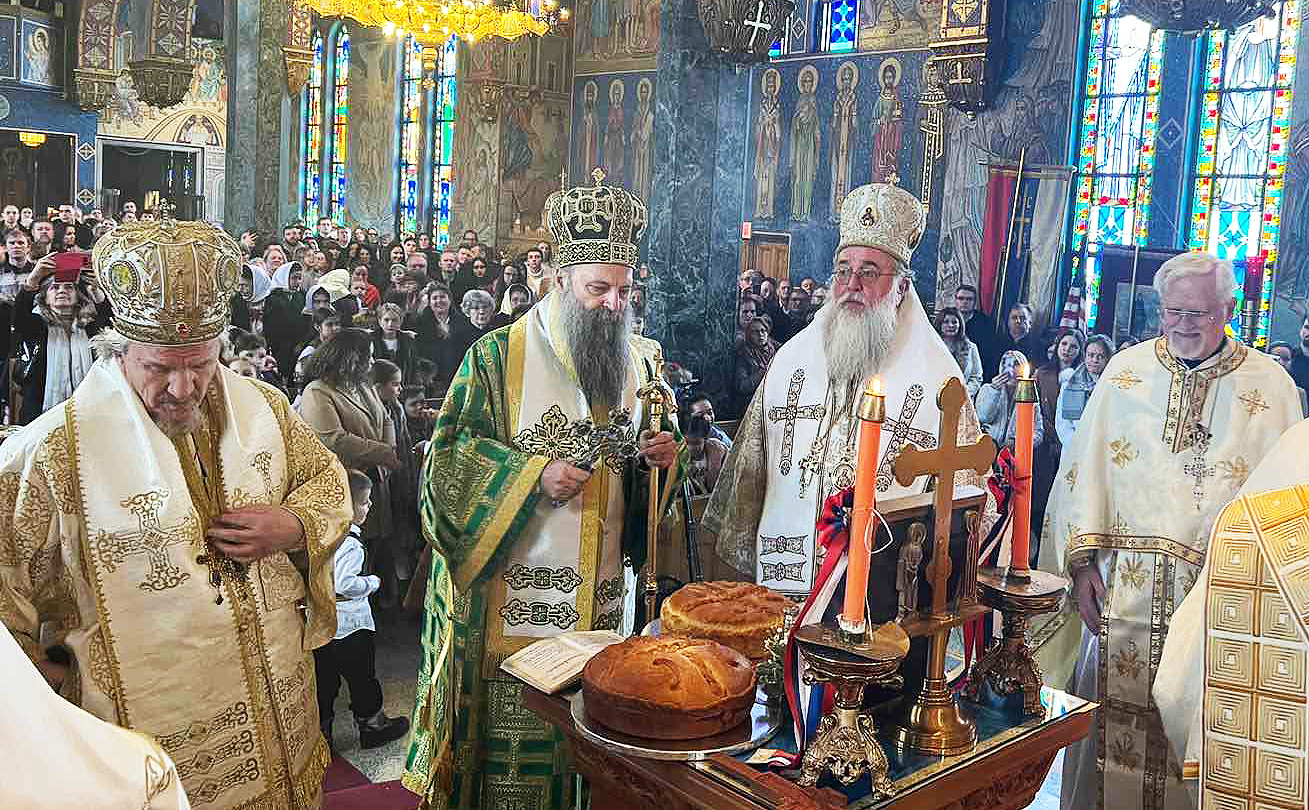
In Orthodox Christianity, the Divine Liturgy is the celebration of the Eucharist, the sacrament of the Body and Blood of Christ. It is the service in which the Church gathers, offers bread and wine, calls upon the Holy Spirit, and receives the very Body and Blood of the risen Lord. But it is considerably more than a sacramental rite. It is a complete theological event, a dramatization of the entire economy of salvation from creation through incarnation through death and resurrection to the final Kingdom of God, all enacted and made present through word, chant, gesture, icon, incense, and the transforming action of the Holy Spirit.
The Divine Liturgy is called "divine" not because of the beauty of its earthly form, but because its true celebrant is not the priest or the bishop but Christ Himself. The priest acts as an icon of the Great High Priest who offered Himself once for all and who continues to offer and to be offered in the Eucharist of the Church. Every Liturgy, in every Orthodox church in the world, is a participation in the one eternal sacrifice of Christ, made present across time and space by the power of the Holy Spirit.
The Origins of the Liturgy: From the Upper Room to the Ancient Church
The Divine Liturgy did not appear fully formed from the mind of a single theologian or liturgical committee. It grew organically from the Last Supper of Christ with His disciples, through the worship of the earliest Christian communities, through centuries of theological reflection and liturgical development, into the magnificent and theologically dense form it has today.
The Last Supper and the Breaking of Bread
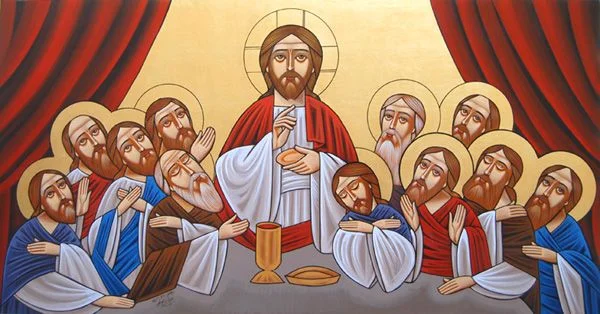
The night before His crucifixion, Jesus took bread, gave thanks, broke it, and gave it to His disciples, saying: "This is my body, which is given for you. Do this in remembrance of me." In the same way He took the cup, saying: "This cup that is poured out for you is the new covenant in my blood" (Luke 22:19-20). This act is the foundation of every Eucharist that has been celebrated in the Christian Church from that night to the present day.
The word translated "remembrance" in the Greek is anamnesis, and it carries a meaning considerably richer than the English word suggests. In Biblical usage, anamnesis is not merely a cognitive recollection of a past event. It is a making-present of that event. When the Church celebrates the Eucharist, it is not merely recalling the Last Supper and the Cross; it is present at the one eternal sacrifice of Christ, which transcends time and is made available to every generation through the sacramental action.
The Earliest Christian Worship
The Acts of the Apostles describes the earliest Christian community as devoting themselves to "the apostles' teaching and fellowship, to the breaking of bread and the prayers" (Acts 2:42). From the very beginning, the celebration of the Eucharist was the center around which the community organized its life. By the time of Justin Martyr's description of Christian worship in the mid-second century, the basic shape of what would become the Divine Liturgy is already recognizable: readings, a homily, prayers of intercession, the presentation of bread and wine, a prayer of thanksgiving and consecration, and the distribution of communion.
The Development of the Liturgical Families
As Christianity spread throughout the Mediterranean world, different regional centers developed their own liturgical traditions. The Eastern Orthodox Church primarily uses the Byzantine liturgical tradition, which traces its developed form to the great theological centers of Antioch and Constantinople. Within this tradition, three Eucharistic Liturgies are in regular use: the Liturgy of St. John Chrysostom, celebrated on most Sundays and feast days; the Liturgy of St. Basil the Great, celebrated ten times a year including the five Sundays of Great Lent; and the Liturgy of the Presanctified Gifts, celebrated on Wednesday and Friday evenings during Great Lent.
St. John Chrysostom and the Liturgy That Bears His Name
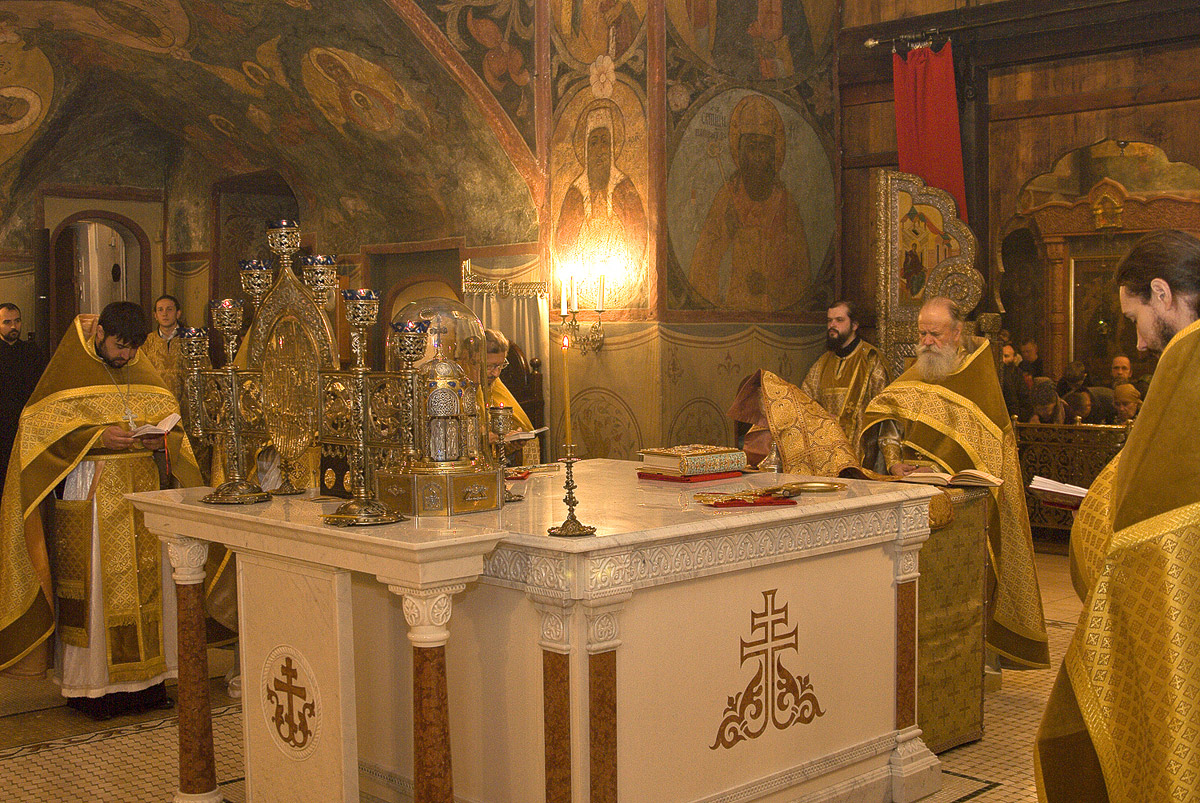
The Liturgy of St. John Chrysostom is the form most Orthodox Christians encounter on a typical Sunday. John Chrysostom, whose surname means "golden-mouthed" in Greek, was Archbishop of Constantinople from 398 to 404 AD and is one of the greatest preachers and pastoral theologians the Church has ever produced. He is venerated as one of the Three Hierarchs, the supreme teachers of the Orthodox Church.
The attribution of the Liturgy to Chrysostom does not mean that he composed it from nothing. What Chrysostom did was take an existing Antiochene liturgical tradition and revise it, making it more accessible to the congregations of Constantinople while preserving its theological substance. The Liturgy that bears his name condensed and crystallized the liturgical wisdom of the preceding centuries into a form of extraordinary theological density and beauty.
The Liturgy of St. Basil the Great represents an earlier and more expansive version of the same tradition. The anaphora in the Basilian Liturgy is considerably longer than in the Chrysostom Liturgy and is a masterpiece of trinitarian theology, covering the entire sweep of salvation history from creation to the Last Day in a single sustained prayer.
The Theology of the Liturgy: What Is Actually Happening?
The Liturgy as the Kingdom Made Present
The most fundamental theological claim the Orthodox Church makes about the Divine Liturgy is that it is not merely a religious service that takes place within ordinary time and space. It is a genuine participation in the eternal worship of heaven. This is what Vladimir's envoys experienced in Hagia Sophia and why they could not decide whether they were in heaven or on earth. They were, in the Orthodox understanding, in both simultaneously.
This is expressed directly in the Liturgy itself, in the Cherubikon, sung at the Great Entrance as the gifts are brought to the altar: "We who mystically represent the Cherubim, and who sing the thrice-holy hymn to the life-creating Trinity, let us now lay aside all earthly cares, that we may receive the King of all, who comes invisibly upborne by the angelic hosts." The congregation is not merely an audience watching a religious drama. They are identified with the Cherubim, participating in the same act of worship that is eternally offered before the throne of God.
The Real Presence of Christ in the Eucharist
The Orthodox Church teaches that in the Divine Liturgy, the bread and wine truly and really become the Body and Blood of Christ. This is not a metaphor, not a symbolic enactment. The Orthodox position is that of the entire ancient Church: the Eucharistic gifts are truly the Body and Blood of the Lord. The Orthodox Church does not use the Western scholastic term "transubstantiation," preferring to affirm the reality of the change while declining to explain the precise mechanism, recognizing that what happens at the altar is a mystery that exceeds the capacity of philosophical analysis to fully account for. The Holy Spirit transforms the gifts. How the Holy Spirit does this is the business of God, not of human philosophy.
The Liturgy as the Work of the Whole People
The Divine Liturgy is the work of the entire gathered community, the laos tou Theou, the people of God. The priest leads and gives voice to the prayers on behalf of the community, but the community is not merely observing; it is participating, offering, and receiving together as one body. This corporate character is expressed in the constant use of the first-person plural throughout the liturgical texts: "We offer to You," "grant us," "have mercy on us." The Liturgy is always the action of the Body of Christ, assembled in a particular place but mystically united with the whole Church in heaven and on earth, with all the saints and the faithful departed.
The Structure of the Divine Liturgy
The Divine Liturgy of St. John Chrysostom can be broadly divided into two major parts: the Liturgy of the Catechumens (the Liturgy of the Word) and the Liturgy of the Faithful (the Liturgy of the Eucharist). Before either of these begins, there is a preparatory rite called the Proskomedia.
The Proskomedia: The Preparation of the Gifts
Long before the congregation gathers, the priest performs the Proskomedia at the table of oblation in the sanctuary. The bread used in the Orthodox Liturgy is leavened loaves called prosphora — leavened because it symbolizes the risen Christ, whose Body was not left in the corruption of death. From the first and largest prosphoron, the priest cuts a square portion called the Lamb, which will become the consecrated Eucharistic bread. Portions from the other prosphora commemorate the Theotokos, the saints, and the living and departed faithful — all arranged on the diskos around the Lamb. The result is a visual representation of the whole Church, living and departed, gathered around Christ at the center.
The Liturgy of the Catechumens: The Word Proclaimed
The Liturgy proper begins with the exclamation: "Blessed is the Kingdom of the Father and the Son and the Holy Spirit." This opening does not begin with a call to worship as though God were absent and needed to be summoned. It begins with a proclamation of the Kingdom. Everything that follows is an unfolding of what that proclamation means.
The Great Litany follows, a series of petitions answered by the congregation with "Lord, have mercy." The Antiphons and the Little Entrance follow, in which the Book of the Gospels is carried in procession representing the coming of Christ into the world. The Trisagion is sung — "Holy God, Holy Mighty, Holy Immortal, have mercy on us" — echoing the song of the Seraphim in Isaiah 6. The Epistle and Gospel are then read, a homily is preached, and the catechumens are dismissed.
The Great Entrance and the Anaphora
The Great Entrance is the most visually dramatic moment of the Liturgy before the consecration. The priest and deacon carry the prepared gifts through the nave of the church in solemn procession while the choir sings the Cherubikon. The congregation prostrates or bows deeply as the gifts pass. The gifts are placed on the altar, the Creed is sung by the entire congregation, and then the Anaphora — the great Eucharistic prayer of thanksgiving and consecration — begins.
The Anaphora opens with an ancient dialogue between priest and people, leads through a prayer of thanksgiving and the singing of the Sanctus ("Holy, holy, holy, Lord of Sabaoth"), then through the Words of Institution, the Anamnesis, and finally the Epiclesis — the invocation of the Holy Spirit. At the Epiclesis, the priest prays over the bread and wine, asking God to send down the Holy Spirit and make them the Body and Blood of Christ. A moment of deep silence falls. The priest bows in adoration. The transformation has occurred. The bread and wine are now the Body and Blood of the risen Lord.
Holy Communion: The Purpose of the Liturgy
The royal doors of the iconostasis open and the priest comes out with the chalice, calling the faithful: "With the fear of God, with faith and with love, draw near." The faithful receive Communion on a spoon, directly into the mouth, both the Body and the Blood together. After receiving, each person goes to receive the antidoron, blessed bread distributed to all present as a sign of fellowship.
Preparation for Holy Communion in the Orthodox tradition is serious. Those intending to receive are expected to have attended Vespers the evening before, read the preparatory prayers, fasted from food and water since midnight, and made their recent Confession. This is not legalism; it is the Church's recognition that what is about to happen is of infinite significance and deserves the fullest possible preparation of soul and body.
The Iconostasis: The Boundary Between Two Worlds
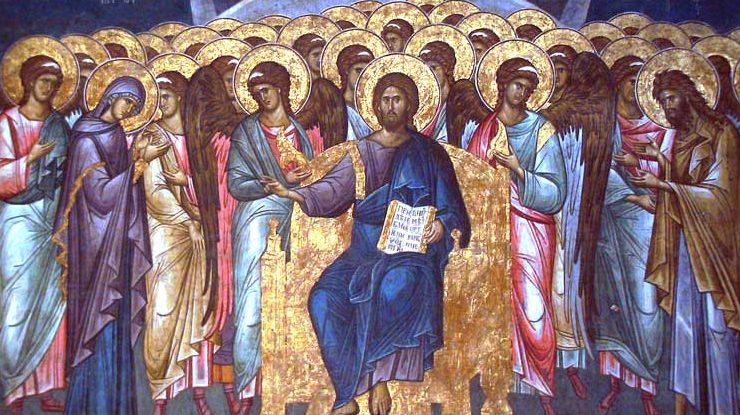
The iconostasis is the screen of icons separating the nave from the sanctuary. To Western visitors it can seem like a barrier. The Orthodox understanding is precisely the opposite: it is a boundary that reveals. Covered with icons of Christ, the Theotokos, John the Baptist, apostles, prophets, and saints, the iconostasis is the assembled Church in its fullness, the cloud of witnesses gathered around the altar in their glorified form. The faithful do not look at a wall — they look at the Church Triumphant standing at the boundary between the present age and the age to come.
The royal doors at the center, opened and closed at various points in the Liturgy, represent the gates of the Kingdom. The liturgical choreography of opening and closing, of concealment and revelation, is itself a theological statement: the divine mystery is genuinely present, genuinely accessible, and genuinely beyond ordinary apprehension, all at the same time.
The Role of the Senses: Beauty as Theology
One of the most striking features of the Divine Liturgy is its engagement of every human sense. The eyes behold icons, golden vessels, brocaded vestments, and candlelight. The ears receive an almost continuous stream of chanted prayer. The nose receives incense. The hands make the sign of the cross. The mouth receives the Body and Blood of the Lord at Communion. This full-sensory engagement is a theological statement about the nature of the human person: body and soul together constitute the human being, and both are called to participate in the divine life.
The beauty of the Liturgy is therefore not a luxury or an indulgence. It is a theological necessity. St. John of Damascus wrote that matter had been sanctified by the Incarnation and could therefore be a vehicle of the divine presence. The icons, the gold, the incense, the music, the vestments are all ways in which the material world is lifted up and made to participate in the praise of God — a foretaste of the ultimate eschatological reality in which all of creation will be transfigured and made transparent to the divine glory.
The Liturgy and Time: Living in the Eternal Now
The Divine Liturgy does something radical with ordinary time. Every Liturgy is the same Liturgy, because every Liturgy is the one Eucharist of the one Christ. When the deacon proclaims at the Anaphora, "Remembering, therefore... the cross, the tomb, the resurrection... and the second and glorious coming," he makes an anamnesis of events that span from the past to the future, including the Second Coming of Christ which has not yet happened in ordinary history. In the Liturgy, this is not an impossibility. The Liturgy stands outside ordinary temporal sequence. It is the eternal present tense of the Kingdom of God, in which past, present, and future are gathered into a single comprehensive act of offering and thanksgiving.
The Liturgy and Theosis: The Eucharist as Deification
The connection between the Divine Liturgy and the Orthodox doctrine of theosis is direct and inseparable. Holy Communion is the sacramental act of theosis. When the faithful receive the Body and Blood of Christ, they receive Christ Himself, and in receiving Christ, they receive the divine life. St. Cyril of Alexandria wrote that the Eucharist is the means by which human nature is permeated with the divine nature, just as iron thrust into fire becomes glowing and full of fire's properties while remaining iron. This is precisely the language of theosis applied to the Eucharist — the primary context in which deification occurs.
Common Questions About the Divine Liturgy
Why Is the Liturgy So Long?
A full Sunday Divine Liturgy preceded by Orthros typically lasts two hours or more. Theologically, the Liturgy is understood as a genuine encounter with the eternal, and it would be strange to treat such an encounter as something to be processed as quickly as possible. Practically, the Liturgy requires time to unfold its full meaning and to allow the prayers and chants and silences to do their work in the soul of the worshiper. There is also a countercultural dimension: to stand for two hours in prayer, with no screens or entertainment, is itself a spiritual discipline teaching the sustained attention the entire spiritual life requires.
Can Non-Orthodox Christians Receive Communion?
No. The Orthodox Church practices closed communion. Holy Communion is offered only to baptized and chrismated members of the Orthodox Church who have prepared through fasting, prayer, and recent Confession. This reflects the seriousness of receiving the Body and Blood of Christ, not a desire to exclude. Non-Orthodox visitors are warmly welcomed to attend the Liturgy, receive the priest's blessing, and receive the antidoron — blessed bread distributed to all present after the service.
Why Do Orthodox Christians Stand During the Liturgy?
In the ancient Church, standing in prayer was associated with the joy of the Resurrection, while kneeling was associated with mourning and penitence. The Council of Nicaea in 325 AD prohibited kneeling on Sundays on the grounds that Sunday is the day of Resurrection. This tradition is preserved in Orthodoxy, where the congregation typically stands throughout the Liturgy. Standing is both a physical act of respect before God and a theological statement about the status of those who have been raised with Christ.
What Is the Role of the Choir?
In the Orthodox Liturgy, the choir does not perform music for the congregation to listen to. It sings on behalf of and together with the congregation, giving musical voice to the people's response to God's word and action. Ideally the entire congregation sings together, and in many Orthodox parishes this is the practice. The richly complex choral settings of Russian Orthodox liturgical music and the Byzantine chant of Greek Orthodox churches represent different but equally ancient and legitimate expressions of the one musical offering.
Go in Peace: The Liturgy After the Liturgy
The Divine Liturgy concludes with the dismissal. The deacon says: "Let us depart in peace." The congregation responds: "In the name of the Lord." And then they go — out of the church, back into the ordinary world of jobs and families and traffic and everything else that makes up the texture of daily life.
But something has changed. The great twentieth-century Orthodox theologian Alexander Schmemann, whose book For the Life of the World is the most accessible modern exposition of Orthodox liturgical theology, argued that the dismissal is not an ending but a sending. The faithful are sent out to be what they have received: the Body of Christ in the world, the presence of the Kingdom in the midst of the present age, the bearers of the divine life into every corner of ordinary human existence. Schmemann called this "the liturgy after the Liturgy," and it is the true purpose of the whole thing.
To stand in an Orthodox church on a Sunday morning, surrounded by icons and incense and the golden light of candles, and to hear the ancient words of the Liturgy rise and fall in the chanted rhythms that have not fundamentally changed in over a thousand years, is to stand at the center of the universe. It is to be present at the event that gives all other events their meaning. It is to touch, however briefly and imperfectly, the reality that Vladimir's envoys glimpsed in Hagia Sophia: God dwelling among His people, and the worship of earth joining the worship of heaven in a single, eternal, unending song.
Sources: Justin Martyr, First Apology; Alexander Schmemann, For the Life of the World; John of Damascus, On the Divine Images; St. Cyril of Alexandria, Commentary on John; The Divine Liturgy of St. John Chrysostom; The Divine Liturgy of St. Basil the Great.
Kai Tutor | The Societal News Team