The True Cost of Running for Congress and the Legal Corruption That Fuels the USA
A Financial Race with an Entry Fee Most Americans Can't Imagine
Running for Congress is not a civic exercise, it is a financial race with an entry fee so high it has transformed what it means to serve in the "people's house."
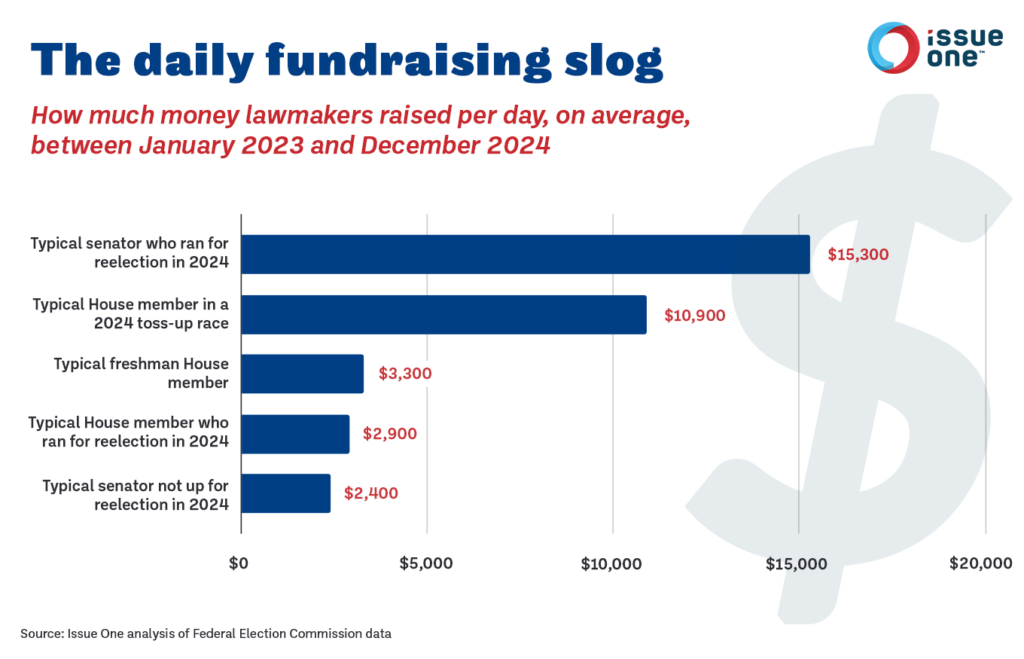
House members serve two-year terms, meaning the fundraising never stops. The moment a member wins, they begin raising money for the next race. Incumbents enjoy a reelection rate of around 90%, largely due to their established fundraising infrastructure, which means challengers must build from scratch what incumbents have spent years cultivating.
How Campaign Money Flows and The Official Channels
Campaign money arrives through several channels. Individual donors are capped at $3,300 per candidate per election, or $6,600 across a primary and general combined. PACs can give up to $5,000 per candidate per election. Party committees the DCCC, NRCC, DSCC, and NRSC, layer on top of that with staffing, polling, and advertising infrastructure.
Then there is the money that operates in the shadows.
Citizens United, Super PACs, and the Dark Money System
The Supreme Court's 2010 Citizens United ruling reversed century-old campaign finance restrictions and enabled corporations and outside groups to spend unlimited money on elections. Super PACs were born from that ruling. From 2010 to 2022, they spent approximately $6.4 billion on federal elections. In 2024 alone they set a record of at least $2.7 billion.
AIPAC: The Most Visible Case of Organized Outside Money
No modern case better illustrates the power of organized outside money than AIPAC. In 2022, after six decades of traditional lobbying, the group made a decisive shift, moving directly into electoral campaigns. AIPAC used its vast funds to oust progressive members of Congress who had criticized Israel, with money flowing in from Republican billionaires and major Trump donors. In 2022, AIPAC and allied groups defeated Reps. Andy Levin of Michigan and Marie Newman of Illinois, both outspoken critics of unconditional U.S. military aid to Israel.
AIPAC is not unique. It is simply the most visible version of what defense contractors, pharmaceutical companies, fossil fuel interests, and Wall Street banks do every cycle spending aggressively through layered, semi-opaque structures to elect allies and remove critics.
30 Hours a Week on the Phone and How Fundraising Consumes Congress
The financial demands of modern campaigning have restructured the daily life of sitting members in a way that makes governance genuinely secondary. Party leadership suggests members spend about 30 hours per week fundraising in call centers across the street from the Capitol.
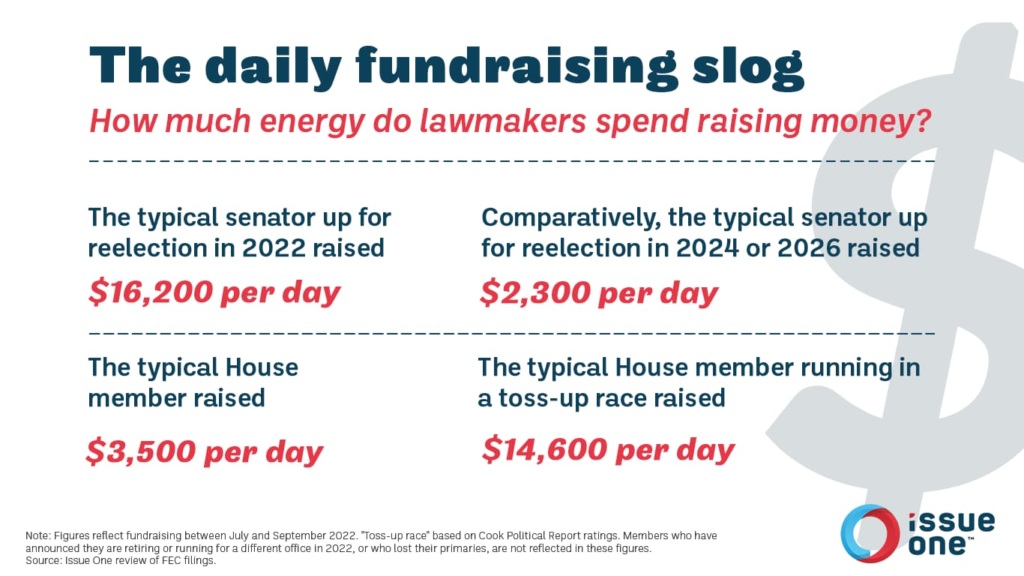
When Florida Republican David Jolly arrived in Washington in 2014, he was told his number one priority was fundraising, that he needed to raise $18,000 every single day. He later described the party call centers as "a cult-like boiler room where sitting members of Congress compromise the dignity of their office sitting in sweatshop phone booths asking people for money." The hallways featured leaderboards ranking members by funds raised, a public shaming mechanism for anyone falling short. The congressional schedule itself is arranged around fundraising, committees don't meet through lunch because those are calling hours.
The Legal Bribe and How Access Replaces Accountability
American law distinguishes between a bribe and a campaign contribution. A lobbyist cannot hand a senator cash for a vote. But that same lobbyist can bundle hundreds of thousands in donations, host fundraisers, direct super PAC spending toward the senator's reelection, and then walk into the senator's office the following week to discuss pending legislation. That sequence is entirely legal.
Once elected, representatives give unparalleled access to donors and lobbyists and have strong incentives to value the input of monied interests over the views of their constituents. Committee assignments formalize this. A seat on the Financial Services Committee, which oversees Wall Street, comes with an expectation of raising from finance. Armed Services members raise from defense contractors. In 2022, the House Freedom Caucus explicitly warned candidates that every committee assignment comes with a specific fundraising quota attached.
Leadership PACs: The Legal Slush Fund
As of 2024, 95% of members of Congress held a leadership PAC, a second political committee running alongside their official campaign. These are often criticized across party lines as slush funds, with money flowing from special interest groups with business before Congress. Only 13% of leadership PAC money came from small-dollar donors. The rest came from wealthy individuals and special interest PACs.
Reform Has Been Blocked By the People Who Benefit
Legislation to fix any of this has been repeatedly introduced and killed. The DISCLOSE Act, which would require dark money groups to reveal their donors, has been blocked by Senate Republicans in every Congress since 2010. The people with the power to change the system are the people who have most successfully navigated it and they have chosen not to.
The consequences are not abstract. Pharmaceutical and insurance industries are among the largest donors to congressional campaigns, the U.S. spends more on healthcare than any country on Earth while producing worse outcomes than most peers. The firearms lobby has spent hundreds of millions blocking gun legislation that polls show the majority of Americans support. Fossil fuel interests have delayed meaningful climate policy for decades. Wall Street helped write its own deregulation. These are not coincidences, they are the return on investment.
Structural Corruption: The House Was Built This Way
The corruption embedded in American congressional politics is not the old-fashioned kind — the envelope of cash, the whispered favor. It is structural. It is legal. It is enforced by party leaders, ratified by courts, and defended by the lawmakers who benefit from it.
The donor does not need to ask for anything specific. The relationship itself is the ask. The access is the reward. And anyone who didn't play by these rules would not have raised enough money to get elected in the first place. The house is not on fire. The house was built this way.
Kai Tutor | The Societal News Team
Follow Us!
It helps decentralize our presence across the web and it's completely free!
Instagram ➤
Youtube ➤
Substack ➤
X.com ➤
Telegram ➤
TikTok ➤