Russia's Escalating Drone War on Ukraine's Railways
A New Phase of the Air War
As Russia's full-scale invasion of Ukraine enters its fifth year, the country's railway network has emerged as a primary target of intensified aerial attacks. Once focused mainly on fixed infrastructure like stations, bridges, and depots, Russian forces have shifted since late 2025 to actively hunting moving trains, including passenger services, using modified long-range drones.
This evolution marks a dangerous escalation, turning routine journeys into high-stakes ordeals for tens of thousands of civilians daily. Between 80,000 and 90,000 people are aboard Ukrainian trains at any given moment, as rail serves as the backbone of long-distance travel since civilian aviation was grounded in 2022. Ukrainian officials have described the campaign as deliberate "logistical terror" targeting both civilians and military supply lines simultaneously.
The Scale of the Campaign
These figures build on earlier patterns, with attacks intensifying dramatically from autumn 2025 onward. Strikes have killed civilians, injured railway workers, and forced widespread evacuations, disrupting essential travel and cargo movement across the country.
Key Incidents
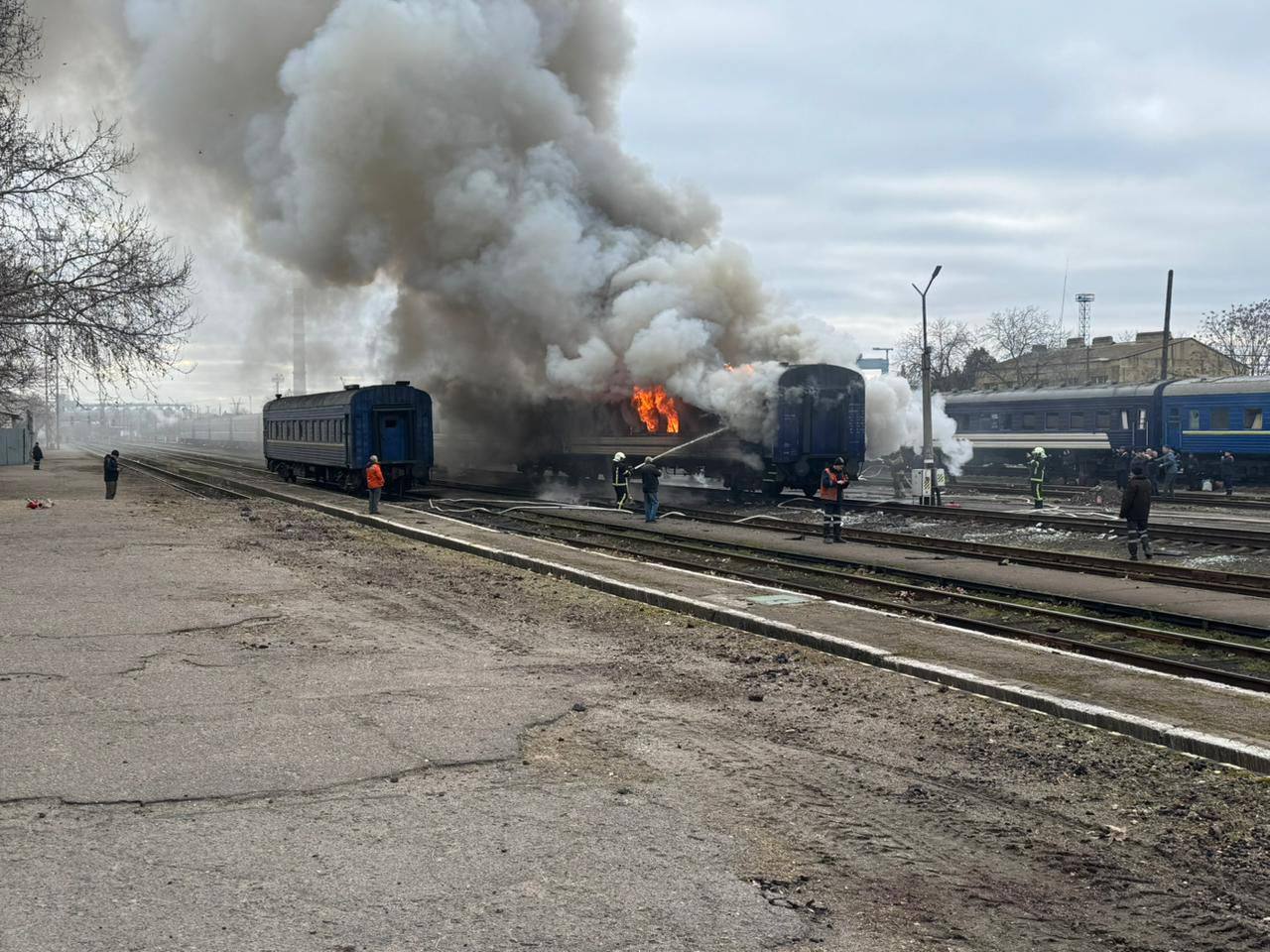
Three Geran-2 drones targeted the Barvinkove-Lviv-Chop passenger train carrying 291 civilians. One carriage was hit and caught fire, killing at least five people. Some bodies were so badly damaged that DNA identification was required. It was one of the deadliest single attacks on a Ukrainian passenger train since the full-scale invasion began.
A commuter train near Kryvyi Rih was struck, killing one person and wounding others.
A drone hit a passenger carriage, injuring a railway worker. Timely evacuation prevented passenger casualties.
A train carrying 200 passengers was attacked, damaging the locomotive but leaving passengers unharmed after evacuation.
Additional strikes on multiple routes caused shrapnel damage and crew injuries.
An FPV drone struck a regional electric commuter train, killing a 61-year-old passenger who refused to evacuate despite rapid response by railway crew.
Ukraine's Response: Emergency Evacuation Protocols
Ukrzaliznytsia has implemented a robust real-time monitoring system, with a central command center and regional teams working alongside Ukraine's Air Force. Over 4,000 staff have been trained in emergency evacuation protocols and safety leaflets explaining the procedures are placed in every carriage.
- Train stops immediately
- Passengers leave large luggage behind
- Disperse 5 to 15 meters or more from the tracks
- Lie face-down with mouths open to reduce blast effects
- Cover heads; crews provide blankets for additional cover
- Psychological support provided by trained crew members
These measures have saved numerous lives, though tragic non-compliance has led to fatalities, as seen in the Slatyne incident where a passenger refused to evacuate.
How Russia Is Hunting Moving Trains
Russia has modified Shahed-type drones with cameras for real-time targeting of moving trains, extending their ability to hunt targets within control ranges. The tactics resemble loitering attacks previously seen on civilian vehicles, now scaled to rail infrastructure with priority often given to scarce locomotives rather than passenger cars.
FPV drones have also been deployed in some attacks. On March 24, 2026, Russia launched the first 16 Rassvet low-Earth-orbit satellites as part of Bureau 1440's project to build a domestic satellite network intended to improve targeting and communications, a capability development that has significant implications for the precision of future strikes.
The Iron Lifeline Under Fire
Rail remains Ukraine's vital lifeline for military logistics, grain exports, evacuations, and civilian mobility. No perfect protection exists against the evolving drone threat, but Ukrainian Railways continues daily adaptations and operations. Passengers are urged to follow crew instructions precisely during alert.
In a war of attrition, the railways continue to bind the nation together through cautious, monitored journeys. Whether Russia's campaign of logistical terror against civilian infrastructure will succeed in severing that lifeline, or whether Ukraine's rapidly evolving countermeasures will keep the trains running, remains one of the defining operational questions of the war's fifth year.
Kai Tutor | The Societal News Team
Follow Us!
It helps decentralize our presence across the web and it's completely free!
Instagram ➤
Youtube ➤
Substack ➤
X.com ➤
Telegram ➤
TikTok ➤