Ukraine x Russia War: March 2026 Situation Report
Overview
After four years of grinding attritional warfare, the Russia-Ukraine conflict entered a pivotal phase in early March 2026. Ukraine reversed Russia's territorial momentum for the first time since the summer 2023 counteroffensive, struck deep into Russia's military-industrial heartland, and US-brokered peace talks collapsed into a deadlock — complicated by the outbreak of a US-Israel-Iran war in the Middle East that drew Washington's attention away from Eastern Europe. The conflict remains far from resolution.
Ukraine Reverses Territorial Momentum
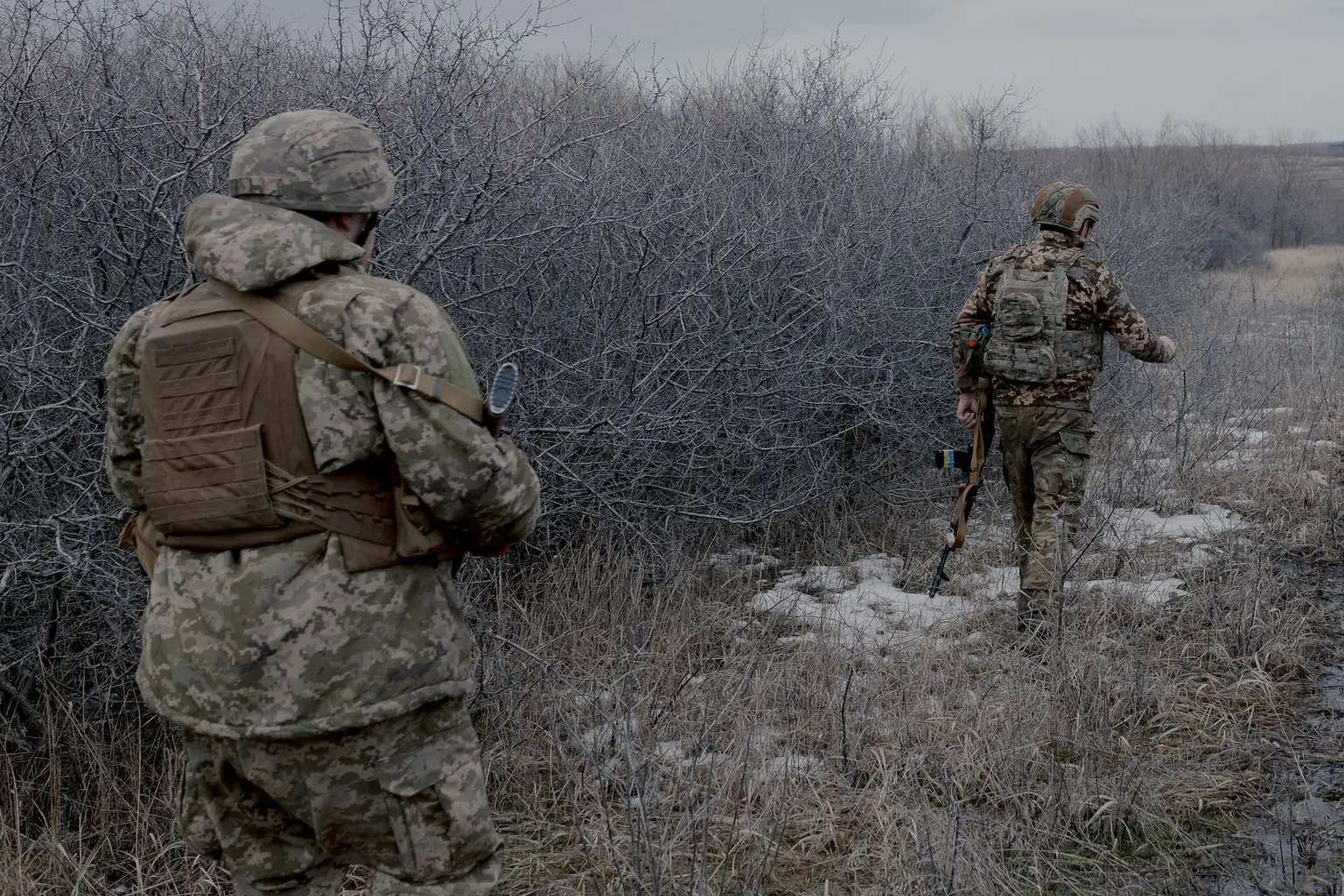
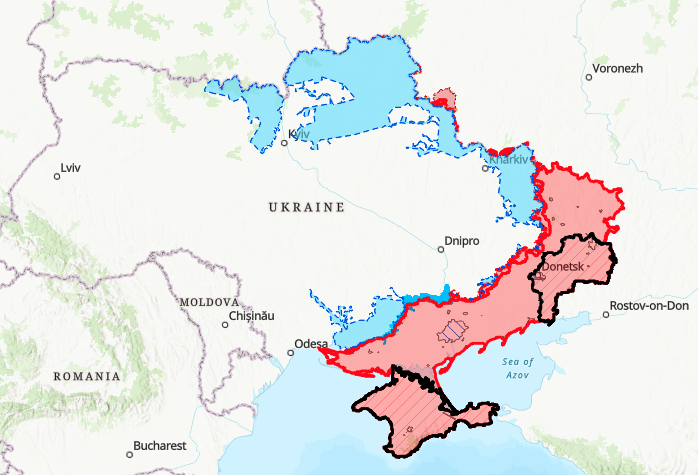
The most significant military development of the past two weeks is Ukraine's reversal of Russian territorial momentum. According to ISW data analyzed by Russia Matters, Russian forces lost 57 square miles of Ukrainian territory in the four-week period of February 10 to March 10, 2026 — a dramatic contrast to the 182 square miles Russia had gained in the prior four-week period. This is the first time since the summer 2023 counteroffensive that Ukraine has recaptured more territory than Russia seized over the same period.
The advances centered on Dnipropetrovsk Oblast, where Ukrainian forces executed two mutually supporting drives in the Hulyaipole and Oleksandrivka directions, advancing 10 to 12 kilometers deep and reportedly liberating more than 400 square kilometers of territory since late January 2026. Ukrainian forces were able to advance rapidly after infiltrating dispersed Russian positions in poor weather conditions and suppressing Russian drone-based defenses. SpaceX's blocking of Starlink satellite access for Russian forces in early February 2026 also likely facilitated the advance.
Territory seized by Russia in past 12 months: ~1,993 sq mi (down from ~2,171 sq mi in all of 2025)
Territory recaptured by Ukraine (Feb 10 – Mar 10): 57 sq mi
Territory gained by Russia (prior 4-week period): 182 sq mi
Putin told Trump on Mar 10 Russian forces are "advancing rather successfully" — ISW data contradicts this
Despite these gains, Russia's overall territorial control remains massive. Even as Ukraine made gains in Dnipropetrovsk, Russia maintained pressure on multiple Donetsk axes, advancing in the Sloviansk direction and near Pokrovsk and Kostiantynivka. Russian forces attempted to exploit fog and poor weather on March 17–18 to resume assault operations in Donetsk and Zaporizhzhia but suffered heavy losses and failed to achieve meaningful advances.
Russian Strikes on Civilians and Infrastructure
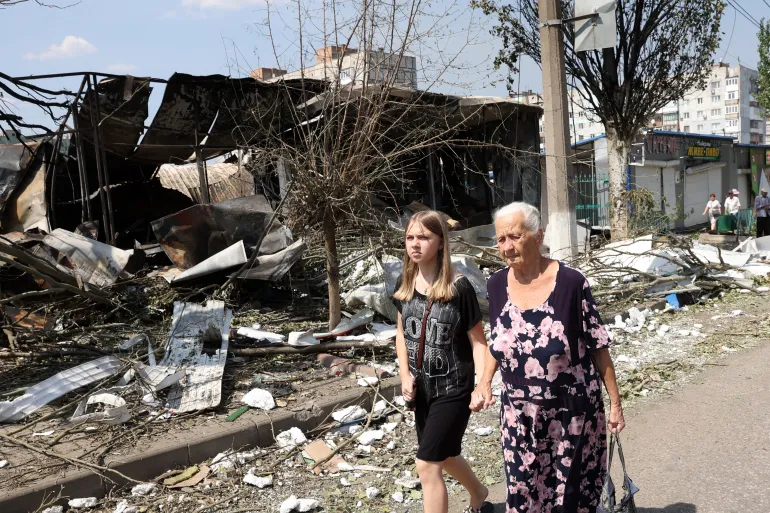
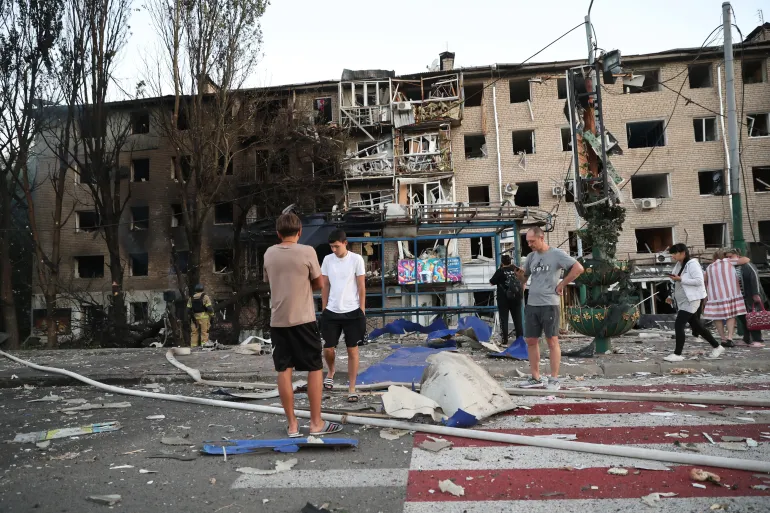
In one of the deadliest single strikes of recent weeks, a Russian cruise missile hit a five-story residential apartment block in Kharkiv on the night of March 6–7. At least 10 people were killed — including two children — and 16 others were wounded. The Kharkiv Regional Prosecutor's Office confirmed the weapon was the Izdeliye-30, a new Russian subsonic air-launched cruise missile with satellite navigation resistant to jamming. Among those killed were a primary school teacher and her second-grade son, and a 13-year-old girl and her mother.
The broader overnight barrage included 29 missiles and 480 drones targeting energy facilities. Ukrainian air defenses downed 19 missiles and 453 drones. In Kyiv, heating was knocked out in 2,806 apartment buildings across four districts. On March 14, Russian forces struck Zaporizhzhia with guided aerial bombs, killing six people and injuring 19 others, razing residential buildings and trapping two people in rubble. On March 19, Russian drones attacked Lviv and Odesa while explosions were reported in Sevastopol, Crimea.
Ukraine Strikes Russia's Military-Industrial Heartland
Ukraine struck the Kremniy El microelectronics plant in Bryansk, Russia on March 10, using British-French Storm Shadow cruise missiles. Kremniy El is one of Russia's largest military microelectronics producers, manufacturing semiconductor components used in Iskander ballistic missiles, Pantsir air defense complexes, S-500 systems, and Kalibr cruise missiles. Russian regional governor Alexander Bogomaz confirmed 7 people were killed and 42 injured.
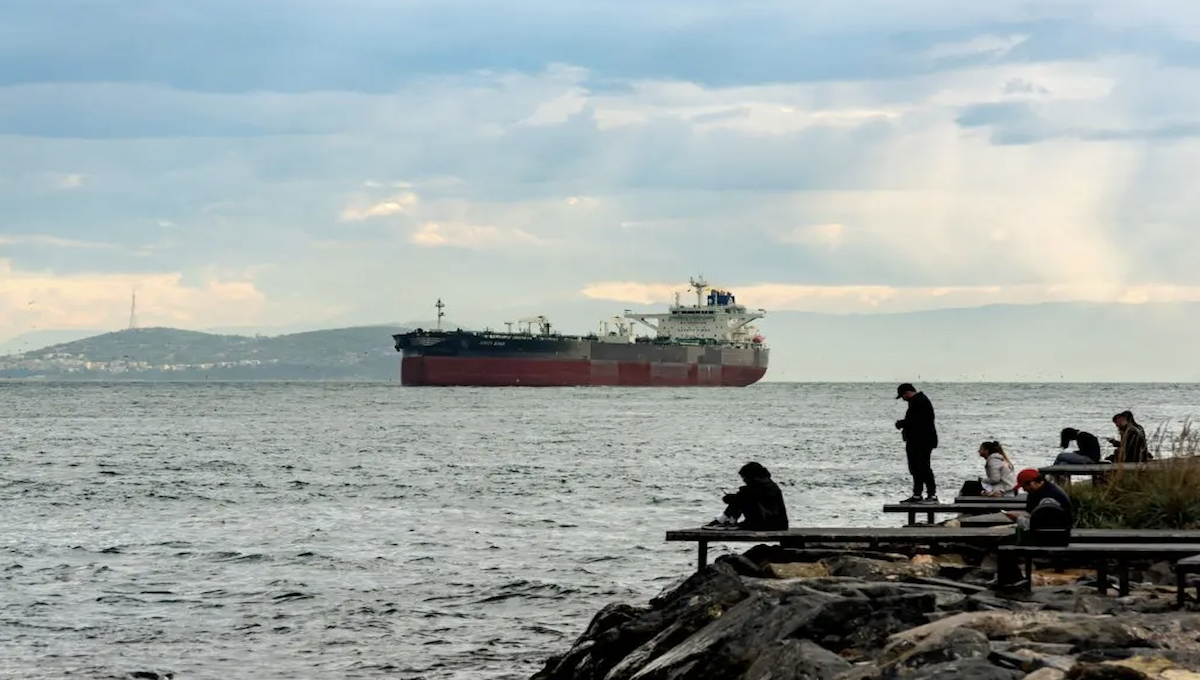
Ukraine also struck the Aviastar aircraft manufacturing plant in Ulyanovsk, an aircraft repair plant in the Novgorod region, and the Tikhoretsk oil pumping station in Krasnodar Krai. Ukrainian forces additionally struck Russian ships in the Kerch Strait, disrupting the ferry service supplying occupied Crimea.
Aviastar aircraft manufacturing plant, Ulyanovsk: struck by Ukrainian forces
Aircraft repair plant, Novgorod region: struck by Ukrainian forces
Tikhoretsk oil pumping station, Krasnodar Krai: struck by Ukrainian forces
Russian ships in the Kerch Strait: struck, disrupting Crimea ferry supply route
Intensity of Russian Air Assault
Russia's air assault campaign continued at extreme intensity throughout March. On March 18, Ukraine recorded 286 combat engagements in a single day. On March 19, Ukrainian air defense intercepted 109 of 133 Russian drones launched overnight, while Russian strikes on Zaporizhzhia's energy infrastructure cut power to roughly 40,000 consumers.
Casualties
Casualty figures carry significant uncertainty and vary widely by source. The most credible independent estimates available as of mid-March 2026: Russian military casualties (killed and wounded) stand at roughly 1 million according to a late February 2026 estimate shared with Russia Matters by a former senior Western official. CSIS's January 2026 estimate placed the figure at 1.2 million including missing, with up to 325,000 killed. Ukrainian military casualties are estimated at 250,000–300,000 by the same Western official; CSIS estimated 500,000–600,000 including missing, with 100,000–140,000 killed. Ukraine's officially published daily Russian loss tallies are widely regarded by independent analysts as upper-bound estimates whose methodology is unclear.
Russian killed: up to 325,000 (CSIS estimate)
Ukrainian casualties (killed + wounded): ~250,000–300,000 (Western official) / 500,000–600,000 incl. missing (CSIS)
Ukrainian killed: ~100,000–140,000 (CSIS estimate)
Note: all figures carry significant uncertainty; sources use differing methodologies
Ukraine's Energy Infrastructure: Two-Thirds Destroyed
Russia's systematic campaign against Ukraine's energy infrastructure has caused severe and lasting damage. Ukraine's available electricity generating capacity has fallen from 33.7 GW at the start of the full-scale invasion to approximately 14 GW as of January 2026. Two-thirds of Ukraine's energy production capacity has been destroyed, damaged, or occupied by Russia since fall 2024. Ninety percent of Ukraine's thermal power generation was destroyed as of May 2025, and 50% of all hydropower installations have been damaged. Russia destroyed 60% of Ukraine's gas production in October 2025 ahead of the 2025–2026 winter. President Zelenskyy stated in February 2026 that every power plant in Ukraine has been damaged by Russian attacks.
Peace Talks Collapse — Iran War Complicates Diplomacy
Three rounds of US-mediated trilateral talks between Ukraine, Russia, and the United States took place in the UAE and Switzerland in late January and February 2026, all led by US envoys Steve Witkoff and Jared Kushner. All three rounds failed to produce a breakthrough. Following the third round in Geneva in mid-February, Zelenskyy publicly accused Russian negotiators of using historical narratives as delay tactics. Russian officials signaled through intermediaries that they would sign a peace memorandum only if Ukraine withdraws from the entire Donetsk region — something Kyiv categorically rejects.
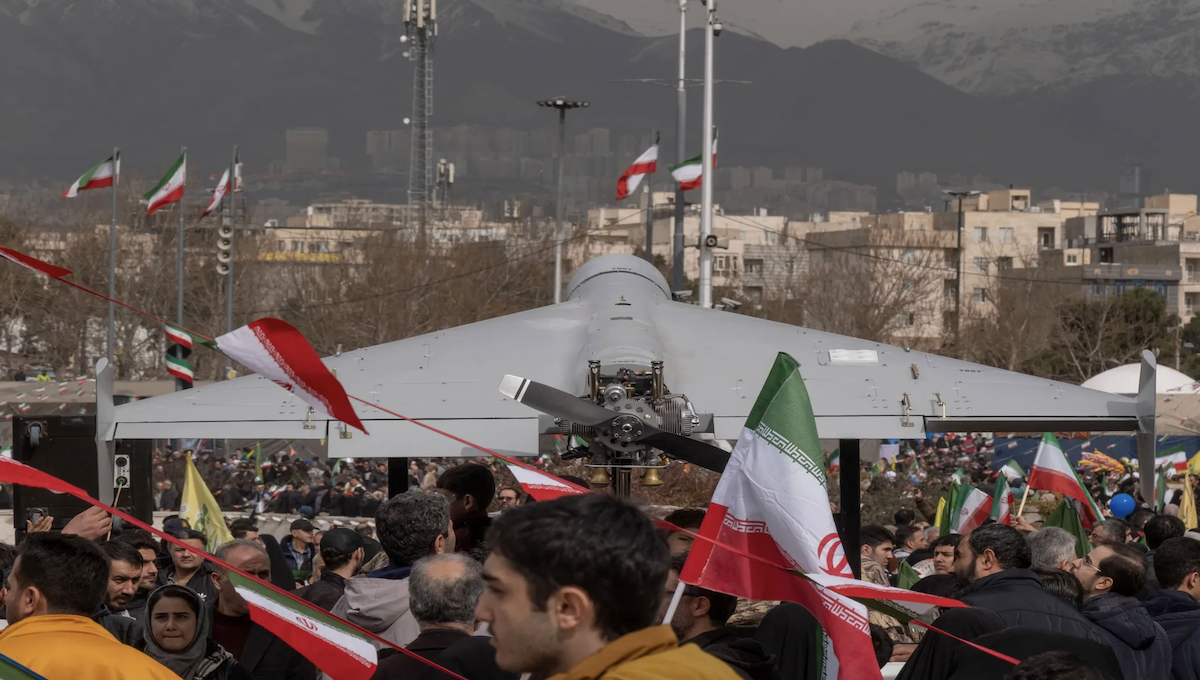
The US-Israeli military campaign against Iran, which began on February 28, 2026, significantly disrupted Ukraine-focused diplomacy. A planned fourth round of trilateral talks expected the week of March 10 was postponed. On March 13, the Trump administration announced a 30-day waiver allowing countries to purchase Russian oil, partially rolling back Russia sanctions in response to soaring energy prices triggered by the Iran conflict. Zelenskyy condemned the move, estimating it could provide Russia approximately $10 billion for its war effort. European leaders including German Chancellor Friedrich Merz, European Council President Antonio Costa, and French President Macron publicly criticized the decision.
4th round postponed after US-Israel-Iran war began Feb 28, 2026
Russia's position: peace only if Ukraine withdraws from all of Donetsk — Kyiv categorically rejects
Mar 13: Trump administration announced 30-day waiver on Russian oil purchases
Zelenskyy: waiver could give Russia ~$10 billion for war effort
Trump's stated deadline for a deal: June 2026
European assessment: any agreement in 2026 likely a fragile, limited ceasefire — not comprehensive peace
Five European intelligence chiefs told Reuters in mid-March that Russia was not genuinely interested in ending the war quickly and was using the talks primarily to obtain sanctions relief and bilateral business deals with the United States, not to reach a durable settlement. European analysts widely assess that any agreement this year would take the form of a fragile, limited ceasefire rather than a comprehensive peace.
Sanctions, Aid, and Nuclear Arms Control
On March 14, the EU Council renewed individual sanctions targeting approximately 2,600 individuals and entities responsible for undermining Ukraine's territorial integrity, extending them through September 15, 2026. On March 16, the EU sanctioned nine additional individuals responsible for the Bucha massacre, including Colonel General Aleksandr Chayko — the most senior Russian military officer on the ground in Ukraine at the outset of the invasion. Spain announced a new military aid package for Ukraine worth €1 billion for 2026. A "Coalition of the Willing" of 35 countries, coordinated by France and the UK, has been developing a security guarantees framework including ceasefire monitoring and multinational forces.
NATO Secretary General Mark Rutte warned during the period that Russia produces more ammunition in three months than the entire NATO alliance produces in a year, and that Russia's artillery ammunition production has increased more than 17-fold since 2021. Separately, the New START treaty between the United States and Russia expired on February 5, 2026 — the first time in over 50 years the two nations have operated without nuclear arms control constraints. UN Secretary-General Guterres described nuclear risks as at their "highest in decades."
Outlook
Russia is expected to launch a spring-summer 2026 offensive. Ukrainian Commander-in-Chief Oleksandr Syrskyi has warned that Russia plans to recruit an additional 409,000 troops in 2026. Ukraine will seek to maintain its Dnipropetrovsk momentum while defending against anticipated Russian pressure in Donetsk and Zaporizhzhia. Whether a fourth round of trilateral talks takes place — and on what terms — is the defining diplomatic question of the coming weeks. Insider reporting suggests the Kremlin expects the war to continue at least through Russia's September 2026 State Duma elections.
Neither side has achieved its strategic objectives after four years. Ukraine has demonstrated it can still take the offensive, but faces an opponent with massive industrial and manpower advantages. Russia has failed to break Ukrainian resistance while paying devastating human costs, but shows no sign of conceding on core territorial demands. A frozen conflict or fragile ceasefire appears more likely in the near term than a comprehensive peace.
Sourced from ISW, Russia Matters, Reuters, AP, PBS, Al Jazeera, Washington Post, CBS News, Kyiv Independent, EU Council, and other verified sources.
Kai Tutor | The Societal News Team 20 MAR 2026
Follow Us!
It helps decentralize our presence across the web and it's completely free!
Instagram ➤
Youtube ➤
Substack ➤
X.com ➤
Telegram ➤
TikTok ➤