Russia's Nuclear Threat to the EU and Ukraine
Four Years of Nuclear Brinkmanship
As the Russia-Ukraine war enters its fourth year, nuclear rhetoric from Moscow has once again escalated, raising alarms across Europe. Recent missile strikes and diplomatic maneuvers have fueled speculation about whether President Vladimir Putin might resort to nuclear weapons against Ukraine or even extend threats to EU nations. While Russian officials and propagandists continue to invoke nuclear options to deter Western support for Kyiv, analysts largely view these as psychological tactics rather than imminent plans for use.
A Pattern of Threats Timed to Western Aid
Since Russia's full-scale invasion of Ukraine in February 2022, Putin and his allies have repeatedly brandished nuclear weapons as a tool of intimidation. Early in the conflict, Putin placed Russia's nuclear forces on high alert, warning that any interference could lead to consequences "never seen in history." This pattern has persisted, with threats often timed to coincide with Western military aid announcements or Ukrainian battlefield gains.
In September 2025, Russian state TV propagandists claimed Western leaders were pushing toward a "nuclear catastrophe" by supporting Ukraine, framing it as a global plot against Russia. In May 2025, Foreign Minister Sergei Lavrov dismissed ceasefires and criticized European leaders for "hysterically demanding" tougher U.S. actions against Russia. These statements align with a broader strategy of hybrid warfare, where Russia combines military actions with disinformation and threats to undermine European resolve.
Belgian Defence Minister Theo Francken echoed this assessment in October 2025, stating that Putin knows a nuclear strike on NATO would result in Moscow being "wiped off the map," and that past red lines, like Ukraine using long-range missiles, have been crossed without escalation following.
The Oreshnik Strike: Signaling, Not Destruction
The most alarming event in early 2026 has been Russia's use of the nuclear-capable Oreshnik IRBM on January 8, targeting western Ukraine near the Polish border. This marked only the second deployment of the Oreshnik since the war began, and it carried conventional kinetic submunitions rather than explosives, suggesting the primary goal was signaling rather than destruction. The strike hit Lviv, about 40 miles from Poland, prompting Ukrainian Foreign Minister Andrii Sybiha to call it a "grave threat to the security on the European continent."
Nuclear expert Jeffrey Lewis argued that using an expensive system like the Oreshnik with dummy payloads prioritizes "political benefit" over military impact, aiming to manipulate Western perceptions of nuclear risk and restrain further military aid to Ukraine. Putin himself asked in a video statement directed at European leaders: "Who will defend you?" The strike came days after Britain, France, and Germany pledged military support for Ukraine's postwar security, including troops in NATO border states.
The End of New START
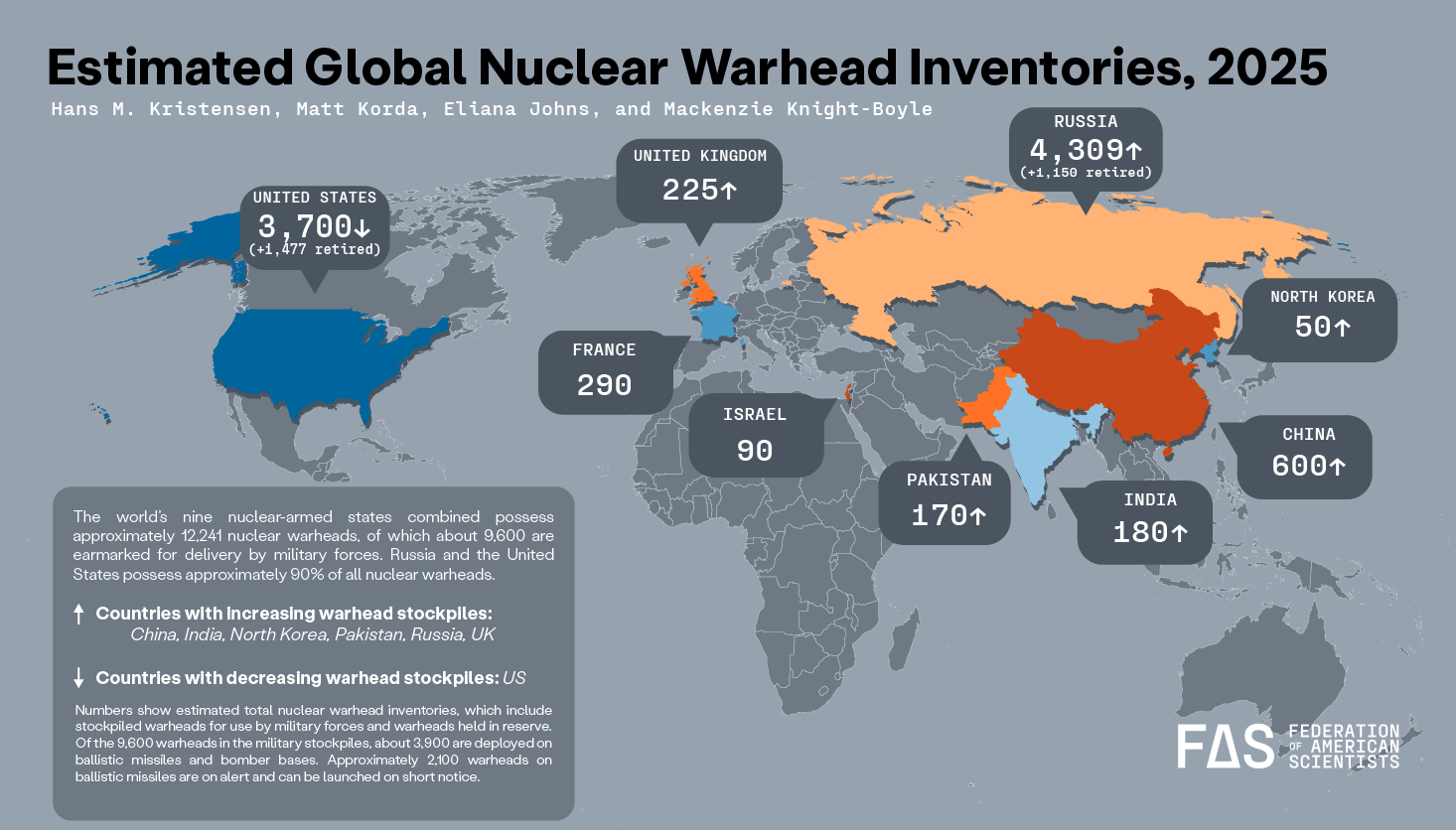
Compounding these threats is the expiration of the New START treaty on February 5, 2026, the last major U.S.-Russia arms control agreement, which limited strategic nuclear warheads to 1,550 per side. Putin suspended Russia's participation in 2023, citing U.S. support for Ukraine, but proposed a one-year extension of limits in September 2025. Trump dismissed the idea in a January 8, 2026 interview, stating: "If the treaty expires, it expires. We'll just do a better agreement," potentially involving China.
Without New START, there are no binding limits on U.S. or Russian strategic nuclear forces for the first time since 1972. Analysts warn that lapsed verification mechanisms could lead to miscalculations and worst-case planning on both sides. Russia's large tactical nuclear stockpile and emerging systems like the Poseidon torpedo were already outside treaty bounds, and the absence of any framework now removes the floor entirely.
What This Means for Ukraine and the EU
For Ukraine, Russia's nuclear threats aim to freeze Western support and force concessions in peace negotiations. Putin has also weaponized winter by systematically targeting energy infrastructure, seeking to exhaust Ukraine's civilian population. Ukrainian Deputy Energy Minister Mykola Kolisnyk reported Russia "going all in" on power system destruction as of January 13, 2026.
For the EU, the proximity of Oreshnik strikes to member state borders underscores genuine vulnerability. Belarus, as a Russian ally, could serve as a launchpad for further threats, potentially turning it into an escalation flashpoint. Trump's January 2026 statements emphasized Europe taking primary responsibility for Ukraine's security, with the U.S. in a secondary role, potentially shifting the financial and military burden significantly toward EU nations.
Bluff or Brink?
As of January 15, 2026, there is no concrete evidence of an imminent Russian nuclear strike on Ukraine or EU territory. The Oreshnik incident and ongoing rhetoric appear designed to intimidate rather than execute. However, the expiration of New START and the potential for miscalculation by either side heighten risks in ways that were not present earlier in the conflict.
Western leaders must balance deterrence with diplomacy, recognizing that while Putin's threats have often proven hollow, the capability remains a sobering reality. Sustained support for Ukraine, coupled with renewed arms control efforts, remains the most credible path to preventing further escalation. The shadow of nuclear war lingers over Europe, but most analysts believe the threshold for actual use remains very high.
Kai Tutor | The Societal News Team
Follow Us!
It helps decentralize our presence across the web and it's completely free!
Instagram ➤
Youtube ➤
Substack ➤
X.com ➤
Telegram ➤
TikTok ➤